
On a early morning a couple days before Thanksgiving, I found myself sitting in The Gathering Cafe in Ocala, Florida. The owner, Sarah, has the easy warmth of someone who knows her customers by more than their orders. She glanced up, smiled, and said, “You’re back. Medium roast again?” There was no database lookup. No loyalty ID. She remembered because she cared enough to.
I’ve been thinking about how rare this has become. How easily we’ve traded these micro-connections for silent transactions.
For the past 25 years, we’ve drifted from face-to-face toward face-to-phone. We’ve redefined “connection” to mean acknowledgment by an algorithm rather than by another human being. It feels efficient. It feels modern. But I’m not sure it feels human.
In 2000, you browsed a bookstore in town. In 2025, you browse infinite shelves in the digital void. In 2005, holiday shopping meant bumping into neighbors while waiting to pay. In 2025, it means tracking a package’s GPS route to your doorstep like a mission-critical shipment.
A few days ago, I wandered into a small bookstore in Ocala. David, the clerk, didn’t ask for my account number or reading profile. He asked questions. He listened. He offered a book that carried the weight of genuine suggestion rather than algorithmic guesswork. It struck me how much richer that felt.
And here’s the important twist: technology itself isn’t the enemy. AI could help Sarah at The Gathering Cafe. It could help David at the bookstore. It could help every local merchant in Ocala, Knoxville, Menlo Park, Gainesville—anywhere. Technology can be a lever for local strength instead of local erosion.
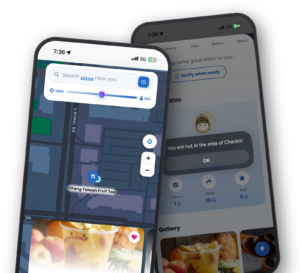
The same phone we scroll TikTok on is the phone we carry into the barber shop, the bakery, the diner. For the first time, the same digital tools that once isolated us can be repurposed to bring people through real doors into real places. Screen to seat. Algorithm to encounter. Data to connection.
That wasn’t possible 5 years ago. Not like it is now.
We can use personalization to help a local bakery fill slow Tuesday afternoons.
We can use push notifications to remind someone of the coffee shop two blocks away instead of the chain 10 miles out.
We can use data-driven insights to help Sarah bring in customers during a rainy slump or help David host a local author night that draws a crowd.
Technology can strengthen local life. It just hasn’t been asked to.
Instead, we’ve built platforms that extract. Dollars. Attention. Ownership. They pull value away from communities and deposit it into distant bank accounts.
This is where I’ll be blunt.
Some people believe that online convenience has outgrown local necessity. That virtual is the future and physical is the past. If that’s what they believe, I invite them to try an experiment: live entirely digitally for 72 hours. Eat digital meals. Have digital conversations. Shop in digital malls. Socialize with digital avatars.
Within a day, they’ll crave something real.
Within two, they’ll feel the ache of actual human absence.
By three, they’ll be standing at the nearest convenience store in Ocala, buying a Red Bull, and grabbing a burger from the fast food joint down the road.
Because human beings are not abstractions.
We are physical creatures in physical spaces.
Here’s the uncomfortable truth: if the internet vanished tomorrow, life would slow down dramatically. But we would ultimately adapt. Paper receipts. Phone calls. Community boards. It would be inconvenient, but survivable.
But if local businesses vanished tomorrow?
If every gathering place—coffee shop, diner, barber, bookstore, toy store, hardware shop—were gone?
That would be catastrophic.
Because local commerce is not just commercial. It is the circulatory system of community life. It creates the spontaneous, unproduced moments that make a place feel like a place.
Standing in line at The Gathering Cafe, you overhear a grandmother advising her granddaughter. You hear a teacher grading papers. You watch a young couple discuss paint colors for their first house. These moments don’t exist in virtual spaces. They can’t. They require geography. They require presence.
And as we enter this week of cultural rhythms:
Thanksgiving: gratitude
Black Friday: frenzy
Small Business Saturday: intention
Cyber Monday: automation
We are asked, implicitly, what kind of world we want to build.
A dollar spent online is efficient.
A dollar spent locally is generative.
It employs your neighbors.
It feeds families you might know.
It keeps money circulating where it matters.
People say:
“Everything is moving online. Local will die eventually.”
But try getting your hair cut online.
Try repairing your engine online.
Try getting your teeth cleaned online.
Try receiving the warmth of human recognition online.
Local isn’t optional.
It is foundational.
So as we move toward the heart of the holiday buying season, I hope we don’t just ask what we are thankful for—but who. The barista who asks how your mom is doing. The toy store owner who hires local teenagers. The bakery that knows your favorite loaf. These are not quaint artifacts. They are anchors.
And here’s the real possibility:
Technology can finally be used to lift local communities, not drain them. We can choose to build systems that move people through real doors into real spaces. Systems that make local life stronger, not thinner.
Let’s use the power of local. Let’s use technology to serve real communities for once, not just enrich distant corporations.
Local isn’t a sentimental preference.
It is essential for human life, for emotional health, and for a society worth belonging to.
Support local this season—and into 2026.
Because the future we build will be the future we walk in.